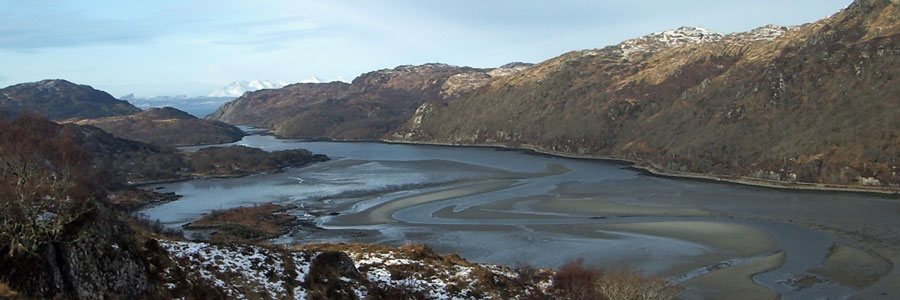
Riding The Jacobite
Your Ride on The Jacobite Steam Train
Arrival at Station
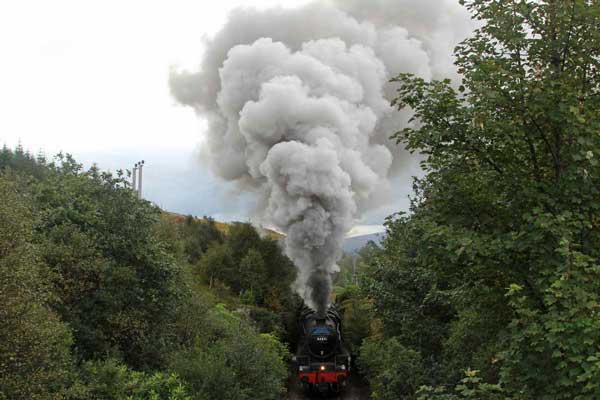
It is a good idea to arrive at the station early to allow in plenty of time to imbue magic of the steam train experience and take photographs of the iconic locomotive and its carriages.
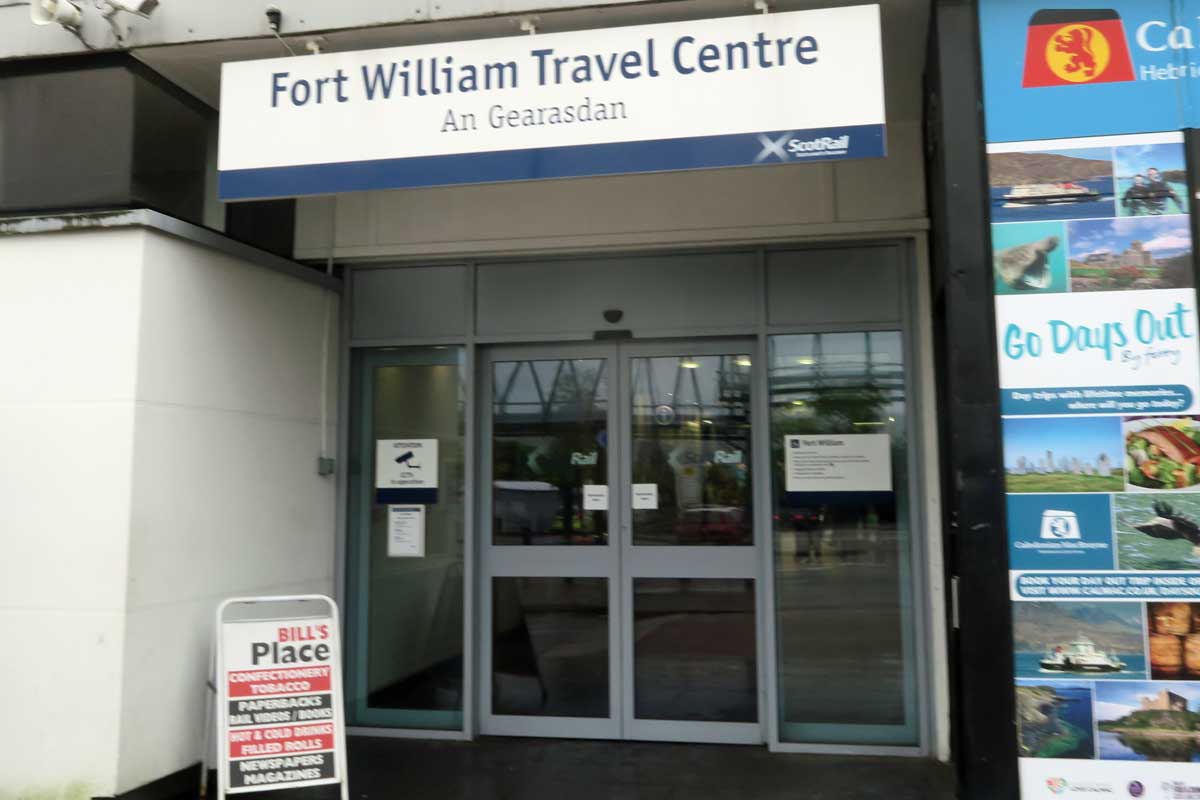
All Aboard
A few toots from the horn will alert passengers to the imminent departure of the train Once aboard there is a brief safety talk before you are left to relax and enjoy the stunning scenery of the west Highland Line.
Highlights of the Journey
The description of the route is given from window seats on the left hand side departing from Fort William and Mallaig.
Caledonian Canal
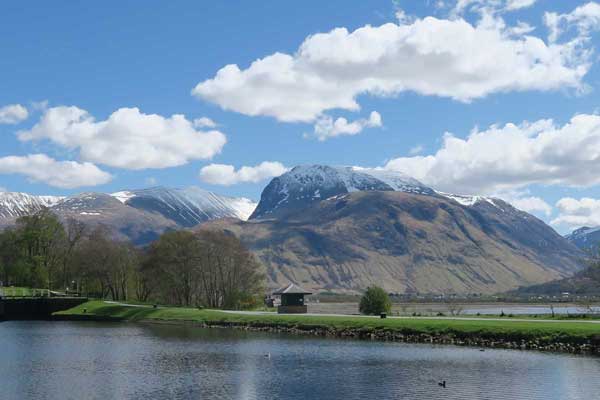
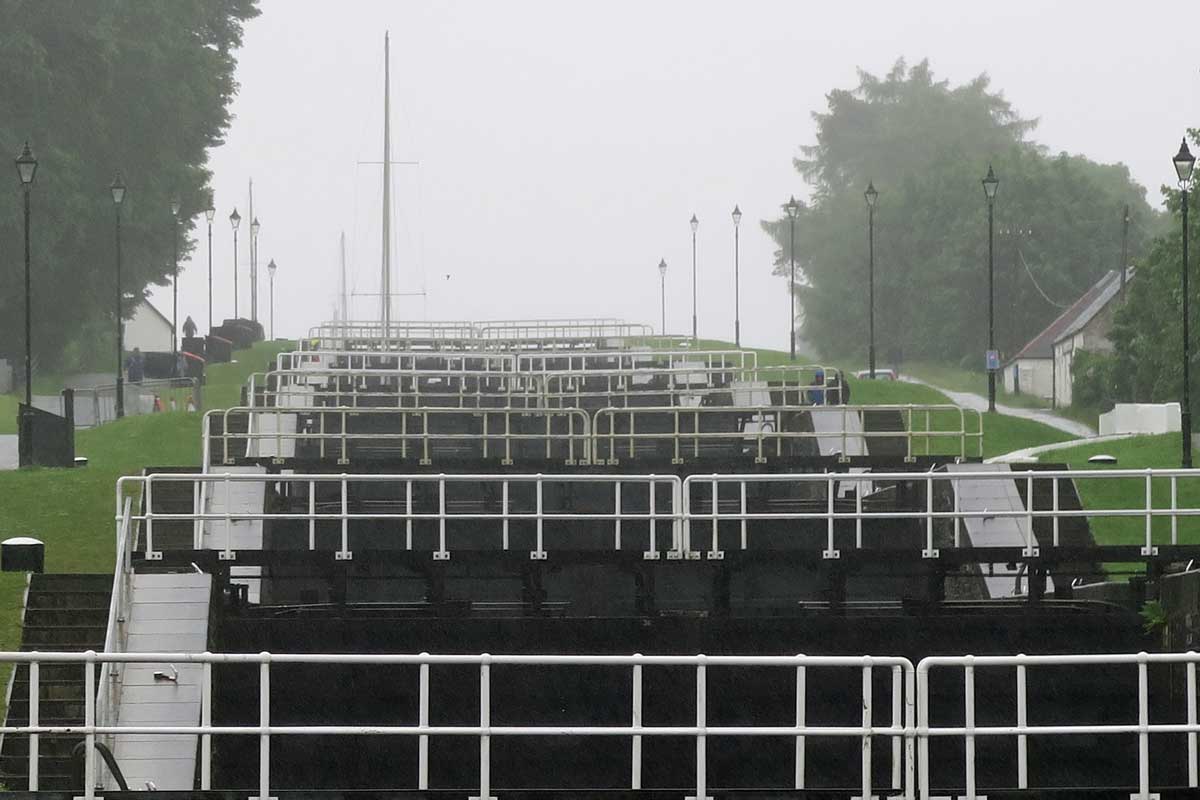
When departing from Fort William, it is no long before you are passing by the lower loch of the Caledonian Canal at Corpach (Corpach Sea Loch), at the foot of Neptune's Staircase. The Caledonian Canal was designed by the Thomas Telford and constructed over two decades in the early nineteenth century. The 62 mile long waterway connects the West Highlands to Inverness by linking the sea lochs of Loch Lochy, Loch Oich, Loch Ness and Loch Dochfour. The twenty two miles of manmade canal consists of 29 lochs, four aqueducts and ten bridges, Neptune's Staircase Lock consists of a flight of eight hydraulically operated lochs which raises boats to a height of 20 metres.
Glenfinnan Viaduct
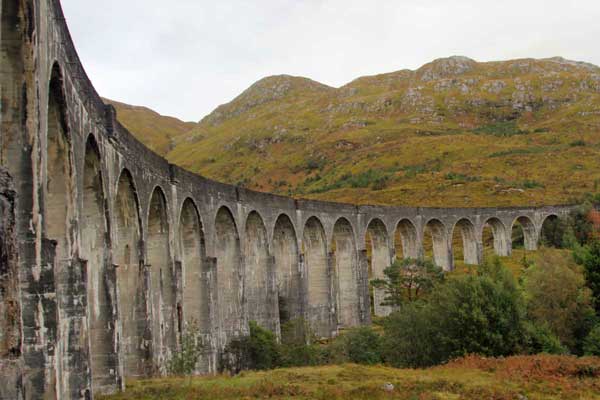
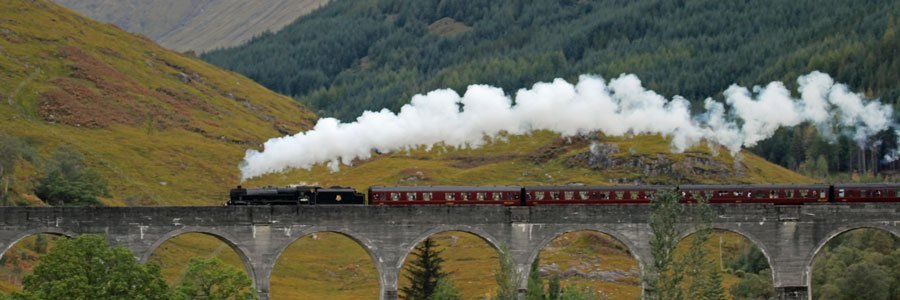
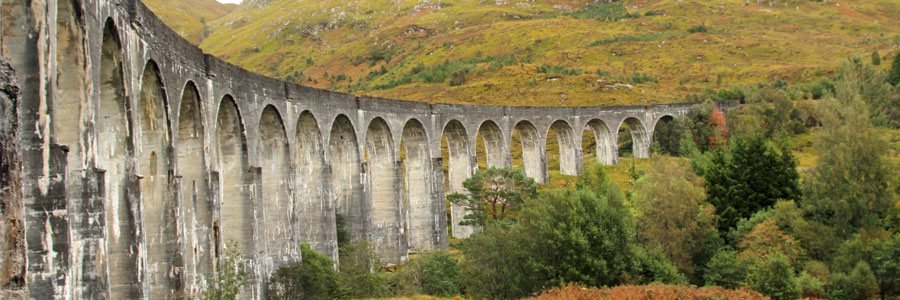
The rail line then skirts along the shores of Long Eil providing a good opportunity to look for coastal birds and waders at low tide. Once passed Loch Eil, the train streams towards Glenfinnan station, passes through a scenic landscape of heath, rough grassland and mixed woodland. The approach to Glenfinnan is heralded by some stunning hill views and a section of oak-dominated woodland fringing the River Callop. An announcement alerts passengers to the upcoming Glenfinnan Viaduct, a magnificent 21 arched viaduct of mass concrete completed in 1898. The viaduct spans the River Finnan at the head of Loch Shiel and has become an iconic feature of the Lochaber landscape. The Glenfinnan Viaduct has featured in many films, but is probably best known for its association with the Harry Potter films.
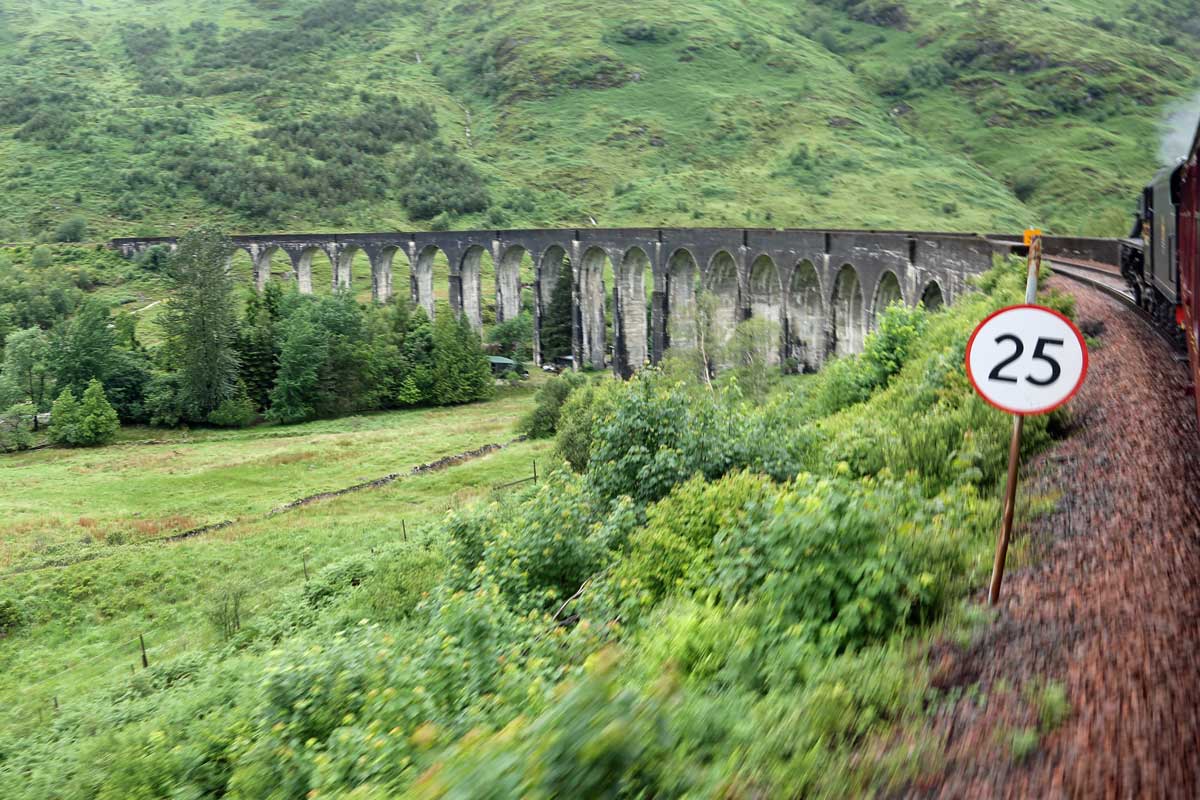
Good views of the viaduct are afforded from the front and rear carriages, taking advantage of the curved profile of the viaduct.
Glenfinnan Station Museum and Signal Box
Shortly after crossing the Glenfinnan Viaduct, the train arrives at Glenfinnan station for a 24 minute station stop. The stop provides passengers with the opportunity to visit the Station Museum and to explore Glenfinnan Station.
The Station Museum provides a fascinating insight into the construction of West Highland Railway Line, with particular reference to the Mallaig Extension Line and the Glenfinnan Viaduct. There are interesting displays on the local geology, the history of the line, those involved in its construction, and the difficulties encountered during its construction. The Museum also contains a reconstruction of the Booking Office, which includes oak furniture, the station clock, a ticket dispenser and a metal safe.
The Glenfinnan Signal Box
It is also well worth exploring the station, with its rail carriages and Signal Box. The Signal Box was built by the Railway Signal Company in 1901 to control the signals and points in and around Glenfinnan station. It was taken out of service in 1986. The workings of the signals and points are demonstrated using the box’s 15-lever frame either by a computerised demonstrator or a volunteer signalman. Visitors are welcome to act at as "a signalman" under the supervision of museum staff/volunteers. It is well worth a visit, although can get a little crowded at peak times.
Loch Eilt and Loch Ailort
There are some more stunning hill views as the train departs from Glenfinnan Station and skirts Loch Eilt, a freshwater loch that separates the district Morar in the north from the district of Moidart in the south. The landscape is dominated by upland grassland with scattered birch woodland and bog.
Loch Eilt with its small islands has featured in several films, most notably Harry Potter and the Prisoner of Azkaban, Harry Potter and the Deathly Hallows – Part 1. One of the small islands in the loch, Eilean na Mòine, is also the site Dumbledore's grave, although the Loch shown is Loch Arkaig. Loch Elite also appeared in the 1980s British comedy-drama film, Local Hero, directed by Bill Forsyth and starring Peter Riegert, Fulton Mackay, Denis Lawson and Burt Lancaster. The Roman Catholic Church, Our Lady of the Braes, at Lochailort, was used for church scenes in the film. The former church is now used as a private dwelling.
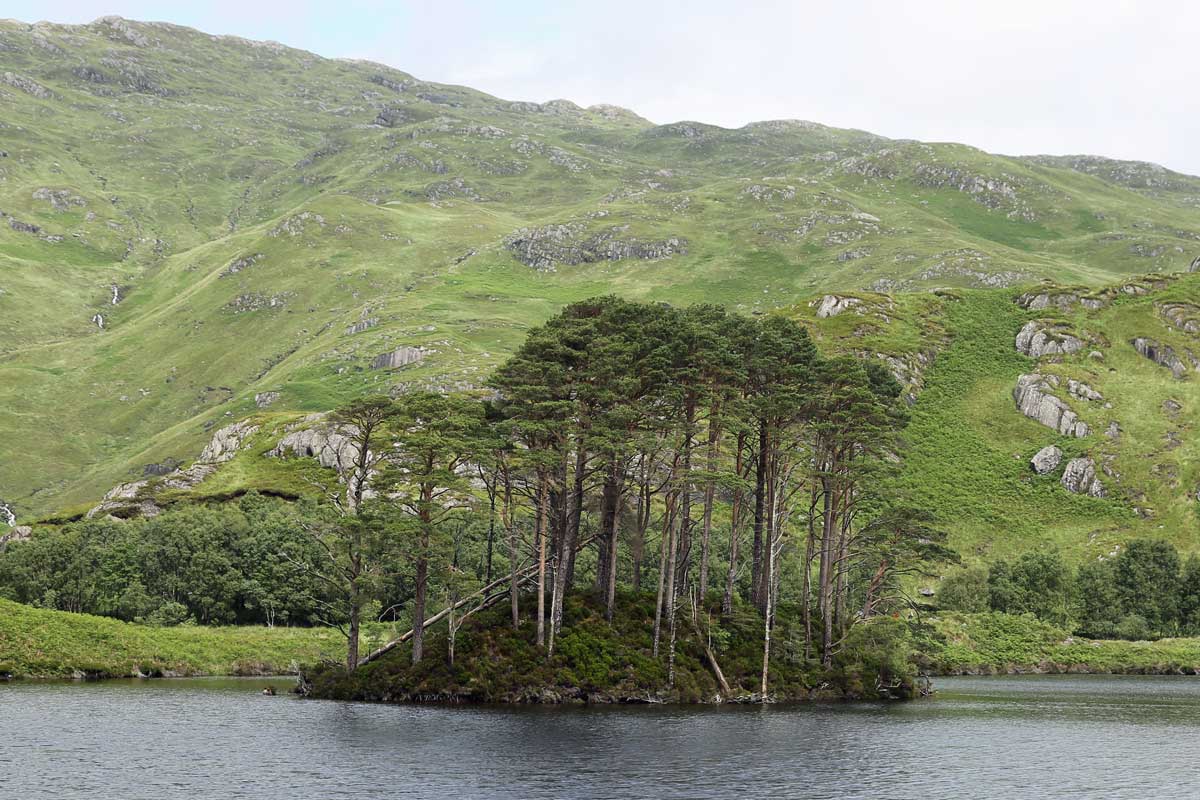
The rugged terrain also served as a training ground for the Special Operations Executive (SOE) Commandoes during the Second World War.
The Prince's Cairn
Once passed Loch Eilt and Polnish, the train steams across Loch nan Uamh Viaduct, with its eight concrete arches, that spans Allt a' Mhama, (Mama Burn), just before it flows into Loch nan Uamh. Just beyond is the Prince's Cairn which commemorates the place where Bonnie Princes Charles (Charles Edward Stuart) boarded a French ship on 20 September 1746 following his defeat at Battle of Culloden on 16 April 1746. The cairn was erected by the 1745 Association on 4th October 1956.
A year earlier, on 25 July 1745, Charles Edward Stuart (The Young Pretender) had landed on the shores of the loch with just eight supporters, and no supplies or funds. A month later, on 19th August , Charles raised his standard at Glenfinnan on the shores of Loch Shiel in front of gathered Jacobite army (of Clan MacDonald, Cameron and Macdonnells) in his bid to claim the thrones of England, Scotland and Ireland for his father James VIII/III (The Old Pretender). The army reached as far south as Derby, before retreating in earlier December 1745.
Glen Beasdale - A Special Area of Conservation
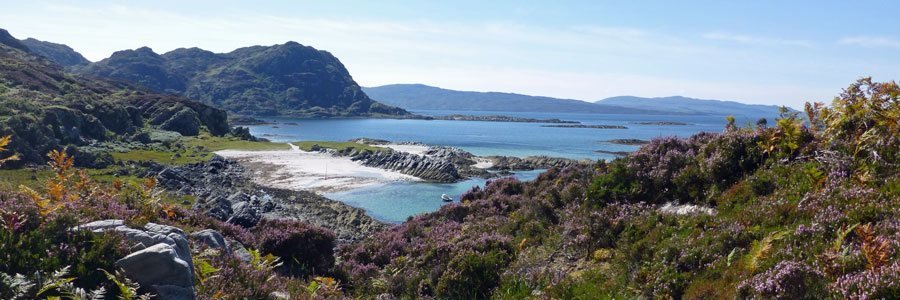
Soon after the train passes through a short tunnel to emerge amidst one of Lochaber's largest oakwoods at Glen Beasdale. This lovely coastal woodland/ "Celtic rainforest" consists sessile oak, with a ground cover of heather, ferns and purple moor grass. The woods are notable for the diversity of its bryophyte and lichen flora and include several species with an Atlantic distribution. These acid woodlands are parts of the and ecologically distinct from comparable oakwoods at Loch Moidart. This is a lovely stage of the journey as you are immersed into the splendour of the Celtic rainforest, punctuated by secret lochans and set amidst spectacular scenery.
Arisaig and the Silver Sands of Morar
Look out for a glimpse of Larachmhor Garden, a 28 acre woodland garden planted by John Augustus Holms to display a fine collection of rhododendrons, exotic trees and shrubs. The garden is noted for its skilful design, historical significance and outstanding plant collections. It is no long before the train briefly pauses at the most westerly mainland station in the UK. Take time to admire the lovely 'white-washed' village of Arisaig, its harbour and the sea loch, Loch nan Ceall, (loch of the churches) at whose head Arisaig resides.
On a fine day, the Small Isles are visible, with the iconic pitchstone hill of An Sgùrr of Eigg against the austere volcanic hills (the Cuillin) of the Isle of Rum.
Camudarach and the Silver Sands of Morar
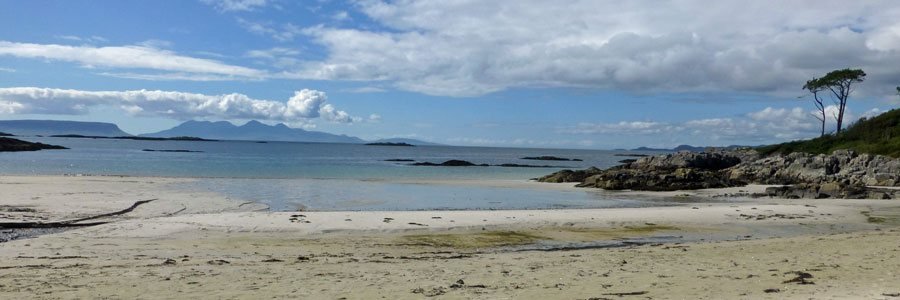
Once passed Arisaig, the scenery changes from hills and gardens to some fabulous coastal views. The West Coast of Scotland boosts some of the finest beaches in the Britain and this stage of the journey is spectacular. Look out for the white sandy beaches at Traigh, the stunning beach and dune system at Camusdarach with its coastal machair community, and the extensive silvery sands of Morar. It is no surprise that these beaches have been refereed to some of the most beautiful beaches in Scotland. In addition, the beach at Camusdaracah was was featured in the classic film, Local Hero.
Loch Morar
Look out for Loch Morar on the right. This vast glacial loch separates North Morar from Arisaig and Moidart in the south. Loch Morar is 18.8 kilometres in length and is the deepest body of fresh water in the British Isles, with a maximum depth of 310 m (1,017 ft). The Loch is home to Atlantic Salmon, brown and sea trout and Arctic char, as well as the monster, Morag , which lurks in the depths. Sightings of this legendary monster date back to the late 1800s, with periodic sightings ever since. If you are lucky you may even catch a glimpse!!
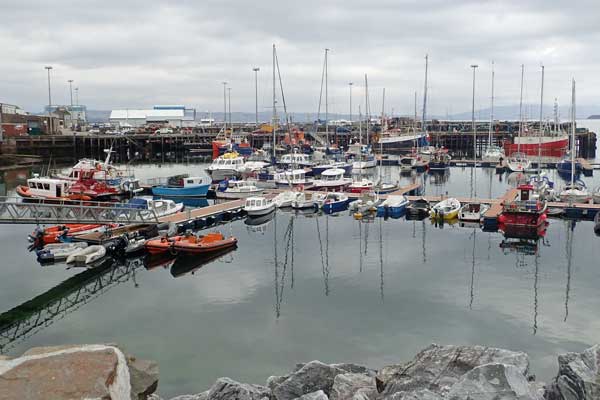
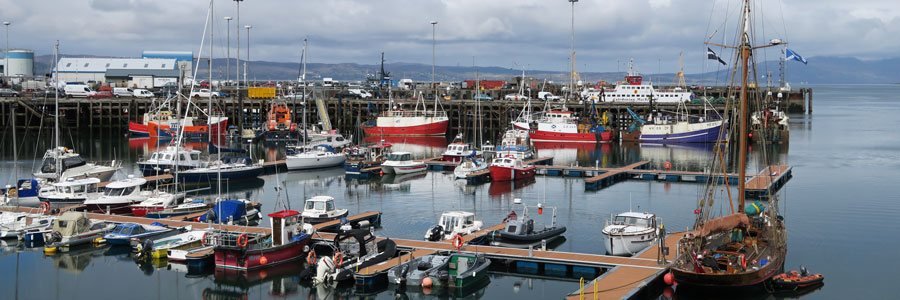
The train passes through the station at Morar before reaching the end of the line at Mallaig. The small fishing port of Mallaig was established during the 1840s and serves as a ferry terminal for services to Knoydart, Skye and the Small Isles.
Arrival at Mallaig
On arriving in Mallaig you have over an hour and a half to explore Mallaig. There is a range of small shops, cafes, pubs and restaurants, as well a marina (please refer to destination leaflet - "Off the Rails- a visit to Mallaig" for details. The Mallaig Heritage Centre, next to the station, provides a fascinating insight into the landscape, history and culture of the Rough Bounds through its exhibits, models and film.
You can also take a short wildlife cruise. For example, Western Isle Cruises offer a one hour cruise to the Green Island on the Knoydart Peninsula between July and September.
There is also an opportunity to watch the locomotive "run round' its train in preparation for the return journey to Fort William.
Steam and Tunnels
There are several short tunnels on route that provide an additional "atmospheric" dimension to the scenic splendour of the journey.
Top Tip
Close your window prior to entering a tunnel if you wish to avoid, the steam and particulate matter entering the carriage.
A fabulous experience!!